
01
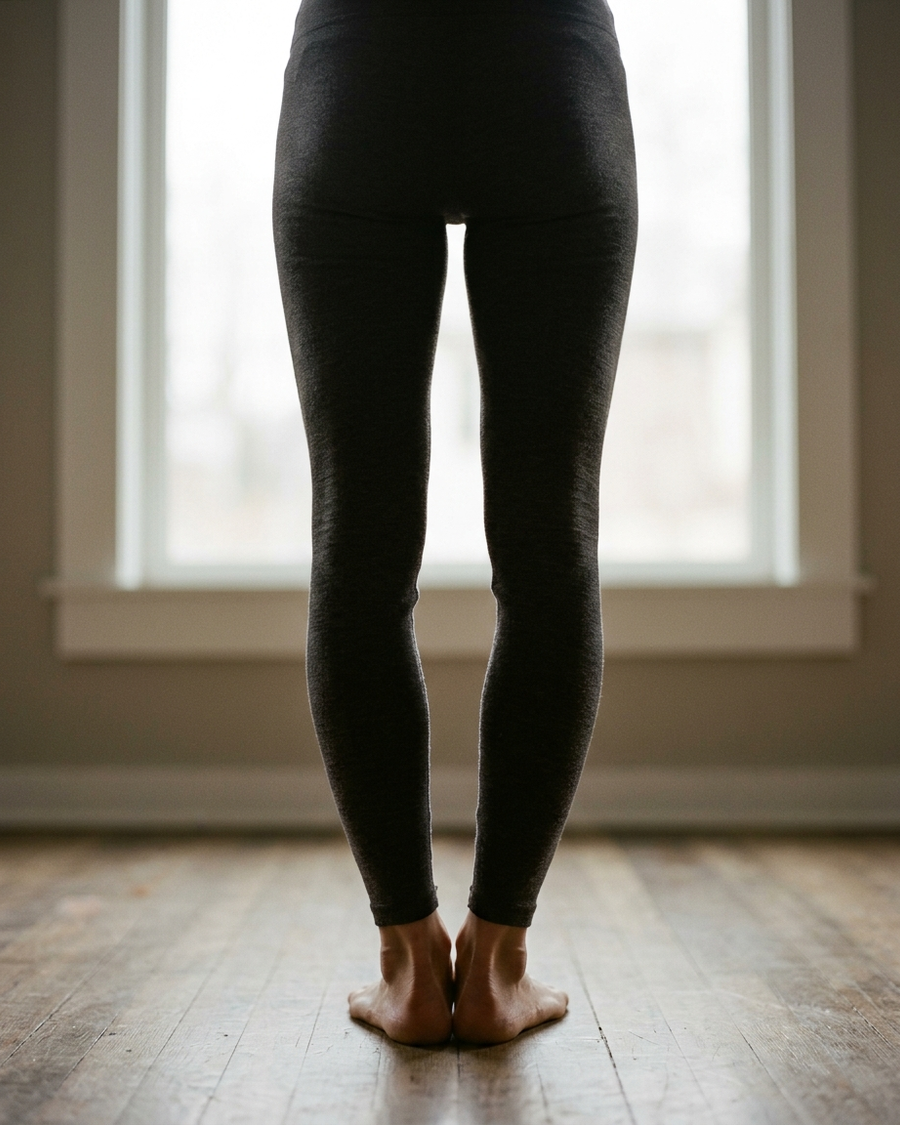
A gap between the knees
Even standing straight, your knees don't touch,
so photos and outfits are always on your mind.
So you don't have to hide your legs
in front of the mirror.
A day when you don't cross your legs for photos, wear the clothes you want, and can walk for a long time without your knees aching. Getting closer to that day is the goal of this care.
For functional bow legs, we plan on about 20 sessions over 3 months. It didn't come from one wrong step. It's the result of years of your body leaning off balance, so undoing it takes time too.
Sometimes it's about more
than the shape of your legs.
Even standing straight, your knees don't touch,
so photos and outfits are always on your mind.
Only the outer edge of one heel wears down,
and your pants zipper twists to the side.
When you walk or exercise, your knees and ankles
don't feel properly supported.
Your child's legs seem to bow a little more every year,
and you're not sure if it's okay to just wait.
Let us be honest from the start.
Some bow legs can be treated, and some cannot.
If you start without telling the two apart, you only spend time and money.
The treatable kind is a problem of the pelvis and muscles.
The bones are fine, but the thighbones are rotated inward, so the legs look bowed.
The kind that can't be treated is when the bone itself is curved. That isn't something hands-on adjustment or exercise can reverse.
You can get a rough idea at home. Stand up straight in front of a mirror and look at which way both kneecaps are pointing.
If your knees point inward toward each other, it's likely the treatable kind.
If your knees face straight ahead, we first check the bones with an X-ray.
We never say something can be fixed when it can't. That's a line we hold.
How things go depends on each person's condition and how much the bone is curved.
A functional imbalance in which the thighbones rotate inward
Pelvic alignment and glute strengthening
We correct the twisted pelvis and build up the muscles that support it, bringing the leg's axis back into line.
→ When you lie down, your toes point closer to straight up, and we confirm the change by comparing recorded measurements of the gap between your knees.
The body has compensated for the length difference, and that pattern has set in
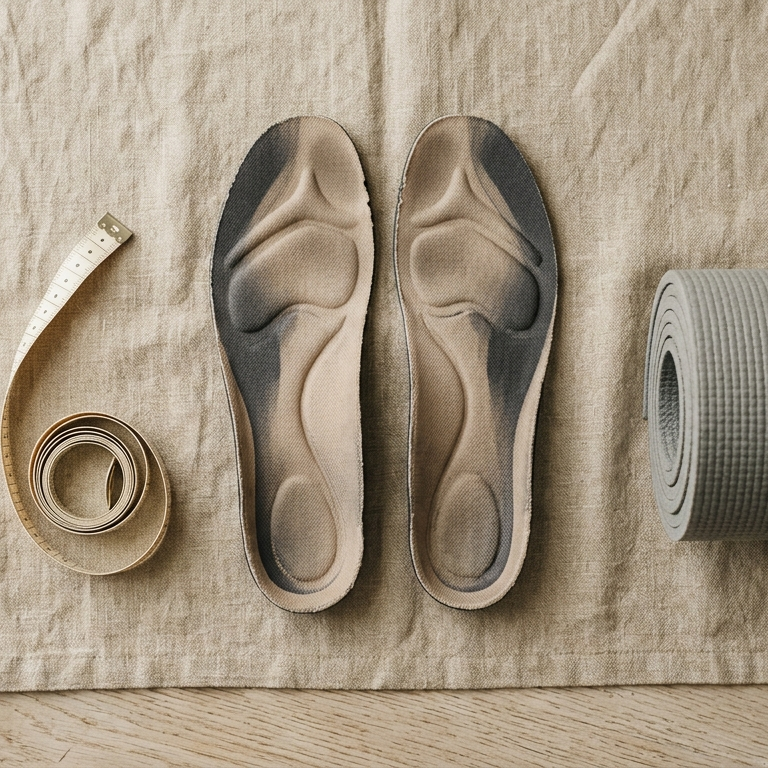
Custom insoles to make up the difference
We first support the actual difference so it doesn't pull you back with every step, then correct your alignment.
→ The strain that was piling onto your knees and lower back gets shared out, so long walks leave you less achy.
A stage when posture and muscles are taking shape together
Posture care during growth
Because the bones haven't set yet, it helps to get posture and muscles on track now.
→ With the glutes and core doing their job, the body holds up better when standing and walking.
Before we start, we first find out whether your bow legs are the treatable kind.
First we ask, "What do you notice when you look at this?" We start from what you see yourself.
We measure the difference in pelvic height, the length of the thighbone and the length of the shinbone separately. This is where we tell whether the pelvis is twisted or the bones really are different lengths.
We look at how your weight is split left and right (within 3% is normal), how it's split front to back (60:40 is normal), and your stride when you walk. We also look at where your calluses are and how your shoes have worn.
We have you do one movement before the adjustment, then the same movement again after. This says more than words. If your alignment is far off, we take photos for the record.
The part that comes from posture and muscles is what we can work on. If the angle of the bone is the main factor, we tell you so plainly. It's possible that one side can change and the other can't.
A. Some can, and some can't. When the pelvis is twisted and the thighbones are rotated inward so the legs look bowed, that can be corrected. When the bone itself is curved, hands-on adjustment or exercise can't reverse it. We find out which kind you have with an exam before we start.
A. Stand up straight in front of a mirror and see which way both kneecaps are pointing. If your knees point inward toward each other, it's likely the treatable kind. If your knees face straight ahead but there's still a gap between your legs, the bone may be the cause. This is only a rough guess, though. We confirm it at your visit.
A. Our correction won't change it, and we make that clear from the start. But even if the bone is curved, if it's putting extra strain on your knees or lower back, we can help spread that strain out. That's a different thing from changing the shape of your legs.
A. If your old posture and habits stay the same, your body tends to return to its old pattern. That's why we work on exercise and everyday posture along with treatment, and why we give you things to do at home.
A. There is a stage when legs naturally straighten as children grow. But if the gap seems to widen year after year, or your child seems uncomfortable walking, it's worth having it checked. During growth, posture and muscles are taking shape together.
A. Even if your pelvis drops on one side, your eyes always try to stay level. To keep them level, the body bends somewhere in between to balance itself. So people with a twisted pelvis often have a neck turned the opposite way. If we fix only the legs and leave the rest as is, things go back.
A. You may feel that way for the first month or two. It doesn't mean something's wrong. When one part is lifted, the whole body shifts along with it. We mention this ahead of time because some people stop right here. Things settle into place after you get through this stage.
A. For posture correction, we recommend twice a week. Just as going to a tutor twice a week gets you further than once a week, putting in more sessions early on means you can keep progressing later with fewer visits. If that's hard to manage, coming in once a week or even once every two weeks is still better for your body.
A. For functional bow legs, we plan on about 20 sessions over 3 months. It didn't appear suddenly from one wrong step. It's the result of years of your body leaning off balance, so undoing it takes time too. This doesn't apply when the bone itself is curved. We find out which kind you have first, and then tell you how long to expect.
의료진이 직접 전하는 건강 정보입니다.
A good part of the bow legs you see in the mirror comes from how your pelvis is positioned. Here's why a tilted pelvis makes the legs look more curved, and the order we follow: correct the pelvis first, then build muscle.
When the legs curve outward, body weight lands more on the inside of the knee. The load on the inner knee is close to "how curved × how heavy." You may not be able to change the angle, but you can change your weight and your muscles. Here are the three common sources of inner knee pain, the warning signs to check first, and three things to write down today.
There's no solid research showing that exercise can change bone angles in fully grown adults. But the hip joints, muscles and habits can change, so the goal of bow leg exercises is to reduce the load that shifts onto the inside of the knee. We've laid out four things: the muscles at the side of the hips, knee direction when standing up, splitting your weight, and how you sit.
We've answered the questions we hear most often in clinic, one question per article.
Feel free to start with whatever you're curious about.